If you’ve been solving inconsistent LLM behavior by continually expanding your prompts, you may be optimizing the wrong variable. As production AI systems become increasingly tool-driven and multi-turn, reliability depends less on writing longer instructions and more on carefully controlling what information reaches the model at every inference step.
Context engineering shifts the optimization target from prompt wording to runtime context assembly. Instead of maximizing tokens, you maximize signal density while minimizing distraction, contradictions, stale information, and unnecessary latency.
Why Do Longer Prompts Often Make LLM Agents Less Reliable?
Large context windows make it possible to send far more information to a model than previous generations allowed. However, larger context capacity should not be confused with guaranteed reasoning quality. Context windows define how much information can be processed, not how effectively every token influences reasoning.
As runtime context grows, several costs increase simultaneously:
- Higher token consumption and inference cost.
- Additional latency from transmitting and processing larger prompts.
- Greater opportunity for contradictory or stale information to remain in working memory.
- A larger evaluation surface because more prompt states must be tested.
- Higher maintenance costs whenever prompt templates, retrieval logic, or tool definitions change.
The exact relationship between context length and reasoning quality depends on the specific model version, provider implementation, retrieval quality, and evaluation task. Production benchmarks should therefore be validated against the provider’s current model documentation and your own application-specific evaluations rather than assuming that maximum context length always improves accuracy.
What Is Context Engineering Compared to Prompt Engineering?
Prompt engineering focuses on how instructions are written. Context engineering focuses on everything the model receives before generating a response.
For modern agent architectures, the runtime context often includes:
- System instructions and behavioral constraints.
- The current user request.
- Retrieved knowledge.
- Tool definitions and function schemas.
- Working memory or short-term summaries.
- Persistent memory retrieved on demand.
- Structured output requirements such as JSON Schema.
This distinction becomes increasingly important as applications evolve from single-turn chat interfaces into autonomous or semi-autonomous workflows.
Architecturally, every LLM performs inference over the tokens presented in its context window. The practice of dynamically selecting, filtering, and assembling those tokens before each model invocation is an application design pattern rather than a capability unique to any particular model provider.
How Should You Design a Runtime Context Stack for Production AI?
A practical runtime context stack typically prioritizes information according to its expected impact on the current task rather than its chronological order.
- System instructions define stable behavior and operational guardrails.
- User input supplies the immediate objective.
- Retrieved knowledge provides only the documents required for the current decision.
- Tool definitions describe callable functions using the provider’s supported tool-calling interface.
- Short-term memory summarizes recent reasoning without replaying entire conversations.
- Long-term memory injects durable user or project facts only when relevant.
- Output constraints specify structured formats using schemas whenever possible.
When structured output is required, JSON Schema support depends on the provider’s API and model generation. Engineers should rely on the provider’s current structured output documentation rather than assuming identical behavior across models.
What Failure Modes Appear When Agent Context Grows Too Large?
Several recurring failure patterns emerge in long-running agents.
Poisoning
An incorrect intermediate conclusion enters working memory and continues influencing later reasoning. This resembles memory contamination and becomes increasingly difficult to detect as conversations grow.
Distraction
The model allocates attention to obsolete conversational history instead of planning from current evidence.
Confusion
Irrelevant contextual information subtly shifts probability toward incorrect reasoning paths.
Context Clash
Multiple retrieved sources disagree, forcing the model to resolve conflicting evidence without sufficient grounding.
These categories are useful debugging labels rather than standardized terminology. They describe common production behaviors but are not formal failure taxonomies defined by a standards organization.
How Can You Apply Context Engineering to a Security Analysis Agent?
Consider a lightweight incident triage agent responsible for reviewing recent Azure security alerts and producing a structured incident summary with a severity assessment.
Rather than asking a model to analyze every available log, the runtime context can be assembled deliberately:
- Instructions define the required summary format and acceptable evidence.
- Tool access includes log readers, search utilities, and known false-positive databases.
- Retrieval limits evidence to recent critical events.
- Working memory records investigation progress.
- Structured output constrains responses to machine-readable JSON.
This architecture generally reduces unnecessary token usage while improving determinism and simplifying downstream automation.
Any severity scoring logic should originate from an organization’s documented incident response policy rather than being inferred entirely by the language model.
What Are the Four Core Operations of Context Engineering?
1. Write External Memory
Persist plans, intermediate reasoning artifacts, and completed investigation steps outside the active context window.
Benefits include:
- Lower prompt size.
- Cleaner working memory.
- Reduced accumulation of stale reasoning.
The tradeoff is cache invalidation and synchronization. External memory stores must remain consistent with the application’s current state or outdated summaries may be reintroduced during retrieval.
2. Select Only Relevant Information
Retrieval should optimize precision rather than volume.
For operational data such as logs, combining lexical retrieval with semantic retrieval is frequently reported to outperform embedding-only retrieval because exact identifiers, error codes, and timestamps often matter. The effectiveness of hybrid retrieval depends on corpus characteristics and should be validated with task-specific retrieval metrics instead of assumed universally.
Selection also reduces token costs and inference latency because fewer irrelevant documents enter the prompt.
3. Compress Conversation History
Long-running conversations benefit from periodically replacing detailed history with concise summaries while retaining the most recent raw interactions.
Compression introduces its own tradeoff. Every summarization step may discard information needed later, so applications should evaluate summary quality separately from generation quality.
This increases the overall evaluation surface because summary generation becomes another component requiring regression testing.
4. Isolate Independent Tasks
Rather than allowing one agent to process every source simultaneously, divide complex workflows into specialized stages.
For example:
- A retrieval component gathers evidence.
- A policy component evaluates severity.
- A writing component generates the final report.
This modular design reduces interference between unrelated reasoning tasks while making failures easier to localize during evaluation.
The cost is additional orchestration overhead, more model calls, and increased end-to-end latency. Whether specialization improves accuracy depends on workflow complexity and should be measured against a single-agent baseline.
How Do Context Engineering and RAG Work Together?
Retrieval-Augmented Generation (RAG), originally introduced by Lewis et al. (2020), addresses one portion of the broader context engineering problem by selecting external knowledge at inference time.
Context engineering encompasses retrieval but extends further by governing:
- Instruction hierarchy.
- Tool availability.
- Memory lifecycle.
- Context compression.
- Structured output.
- Execution planning.
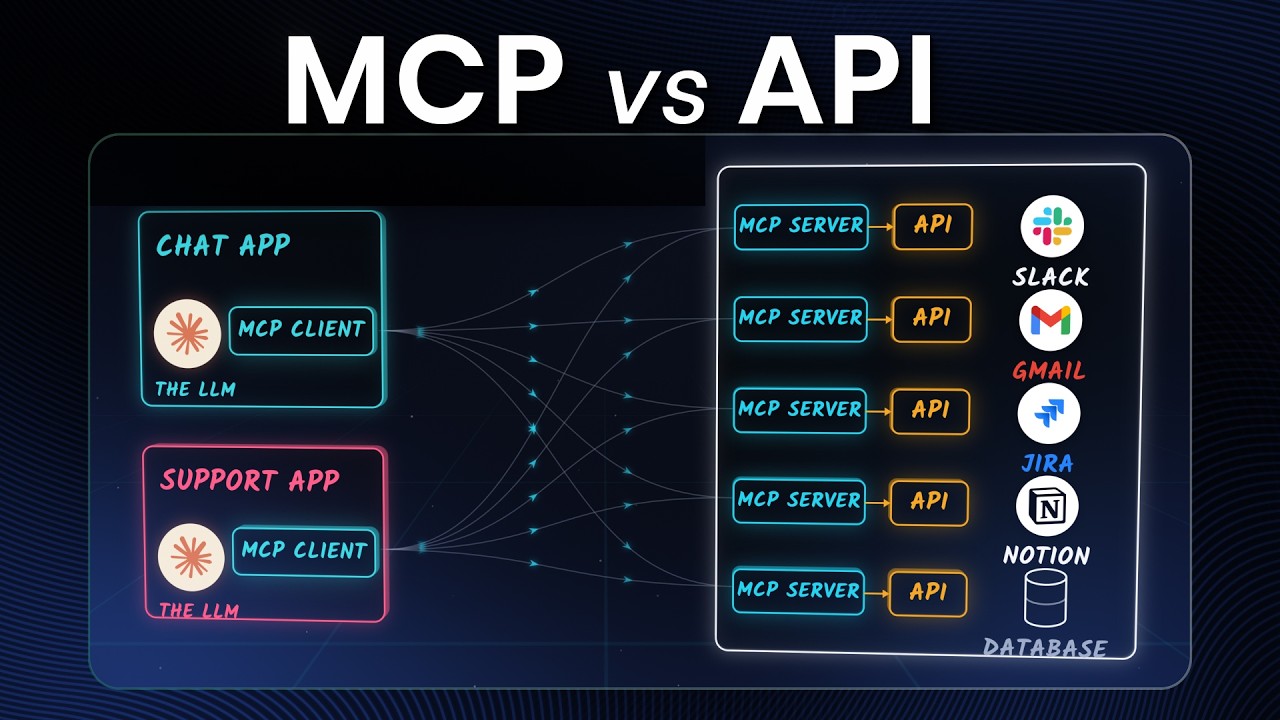
Similarly, tool calling depends on the API implementation of the model provider, while protocols such as the Model Context Protocol (MCP) standardize how external tools may be exposed. Those implementation details should be treated separately from the underlying architectural principle of selective context assembly.
How Should You Evaluate Context Engineering Changes?
Every context modification changes application behavior, making evaluation essential.
Useful evaluation dimensions include:
- Task completion accuracy.
- Hallucination frequency.
- Token consumption.
- Inference latency.
- Tool selection accuracy.
- Retrieval precision and recall.
- Structured output validity.
- Performance under distribution shift.
Operational risks such as prompt injection, retrieval poisoning, insecure tool use, and memory contamination should be evaluated using established guidance such as the OWASP Top 10 for LLM Applications. Organizational governance can additionally draw from frameworks including NIST AI RMF, ISO/IEC 42001, and ISO/IEC 23894 where applicable.
Why Is Context Engineering Replacing Bigger Prompts?
Reliable AI systems are increasingly built by treating context as a constrained computational resource rather than an unlimited container for instructions.
The highest-performing production agents generally succeed not because they receive more information, but because they receive the right information at the right time. Careful selection, memory management, retrieval, compression, and task isolation improve robustness while controlling token costs and keeping evaluation manageable as systems scale.
Prompt engineering remains an important skill, but for production agent architectures, context engineering increasingly determines whether an application remains reliable after thousands of conversations instead of only the first one.